


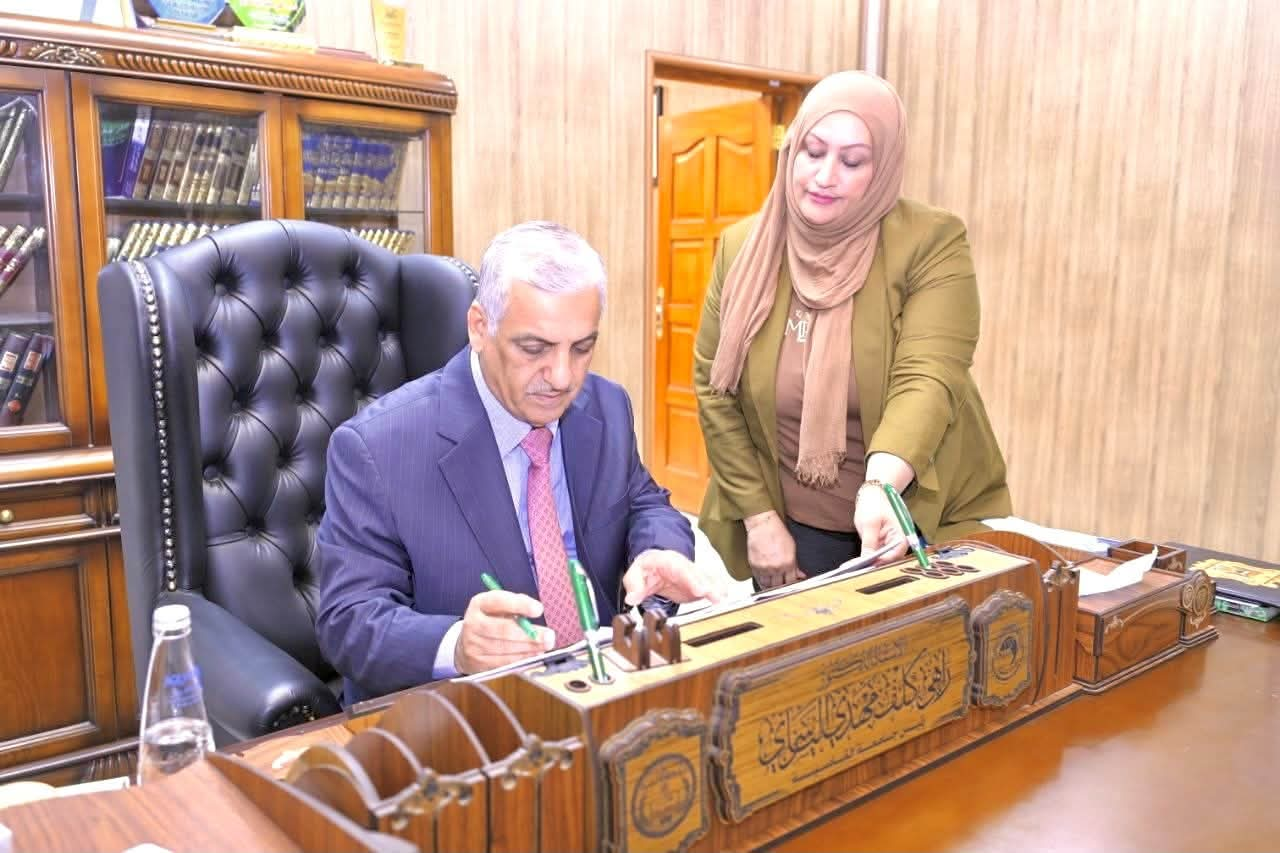
As part of its ongoing efforts to expand the horizons of international scientific collaboration and strengthen partnerships with reputable European universities, the University of Al-Qadisiyah—represented by its College of Science—has entered into a memorandum of scientific understanding with Luleå University of Technology in Sweden. The agreement aims to advance academic and research cooperation, while opening new avenues for scientific exchange, training, and capacity building.
The signing process was initiated by the President of Luleå University of Technology, who signed the memorandum at the university on September 1, 2026. Professor Dr. Nadhir Al-Ansari, representing the Swedish institution, facilitated the finalization of the agreement, which was then signed by the President of the University of Al-Qadisiyah, Professor Dr. Rahi Khalaf Mahdi Al-Yasiri. This step reflects the commitment of both parties to strengthening academic ties and activating joint cooperation.
Located in northern Sweden, Luleå University of Technology is a distinguished research-intensive institution, particularly in scientific and technological fields such as engineering, energy, the environment, natural resources, and modern technologies. The university holds a prestigious academic standing, recognized for its applied research and extensive partnerships with international academic and industrial institutions. This memorandum holds particular significance as it paves the way for collaboration between the two universities in preparing and submitting a joint proposal under the European Union’s Erasmus+ program—specifically for projects focused on training, development, capacity building, and the exchange of academic expertise. This initiative will create new opportunities for faculty members and researchers at the University of Al-Qadisiyah to benefit from European programs.
This step is part of the University of Al-Qadisiyah’s strategy to promote the internationalization of higher education, expand its network of international partnerships, and elevate the standards of scientific research and institutional development. It aligns with the directives of the Ministry of Higher Education and Scientific Research, which emphasize academic openness and cooperation with global university institutions.



 with Luleå University of Technology (Sweden) to foster academic and international cooperation)
لا تعليق