


Under the patronage and attendance of the President of Al-Qadisiyah University, Professor Dr. Rahi Kalf Mahdi Al-Yasiri, and his Assistant for Scientific Affairs, Professor Dr. Sattar Abdul-Hassan Al-Fatlawi, and under the supervision of the Dean of the College of Veterinary Medicine, Professor Dr. Munir Abdul-Amir Al-Fatlawi, and in the presence of government figures…
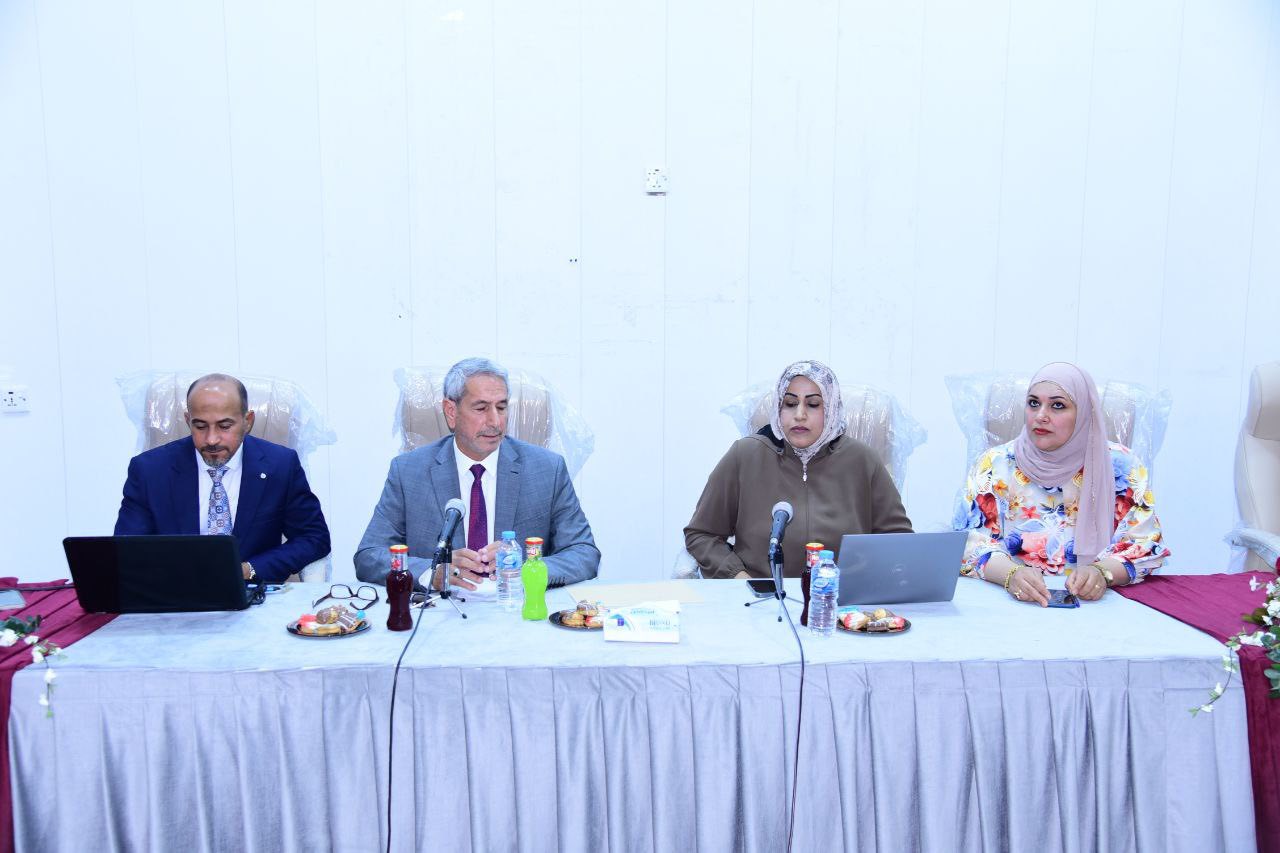
The College of Veterinary Medicine held a distinguished scientific symposium on the prospects for controlling and eradicating hemorrhagic fever in Iraq.
The symposium featured:
Prof. Dr. Mohsen Abdul-Nima Al-Radwan / Prof. Dr. Yahya Ismail Khadir / Dr. Khawla Kazim Abdul-Sada. The symposium was moderated by: Asst. Prof. Dr. Saba Falah Kalf.
The symposium aimed to enhance knowledge and a comprehensive understanding of Crimean-Congo hemorrhagic fever in Iraq, highlighting current challenges and ways to enhance prevention, control, diagnosis, and treatment strategies, with the aim of reducing the spread of the disease and its impact on public health in Iraq. The symposium included: defining hemorrhagic fever and its causative agent, discussing its characteristics, methods of transmission and infection, and the challenges of the disease in humans and animals. The symposium also addressed the hosts that transmit the disease and their role in disease progression. It also included a section on disease prevention methods and the measures that must be taken to reduce human infection.
The symposium recommended the following:
1. Enhancing public awareness: Emphasizing the importance of ongoing public awareness campaigns on the methods of disease transmission, its symptoms, and how to prevent it, targeting particularly vulnerable groups such as livestock workers, butchers, and the general public.
2. Activating the role of “One Health”: The need to adopt a “One Health” approach that links human, animal, and environmental health in combating the disease, by enhancing cooperation and coordination between the Ministries of Health, Agriculture, and Environment, and academic and research institutions.
3. Intensifying preventive control measures:
– Activating tick control campaigns in animals and rural areas.
– Regulating slaughtering operations in licensed slaughterhouses and adhering to health procedures.
– Providing personal protective equipment to workers at risk and training them on how to use it.
4. Enhancing diagnostic and laboratory capabilities:
– Developing and modernizing laboratory capabilities for rapid and accurate virus detection.
– Training laboratory personnel on the latest diagnostic techniques.
5. Supporting scientific research: The symposium recommended the establishment of a research center specializing in the production of vaccines and serums, particularly for diseases endemic in the governorate, such as hemorrhagic fever, rabies, tetanus, and snake venom, among others. It also recommended developing more effective diagnostic, treatment, and prevention methods.
6. Enhancing international cooperation: Exchanging expertise and information with international organizations and other countries with experience in combating Crimean-Congo hemorrhagic fever.


لا تعليق